Description
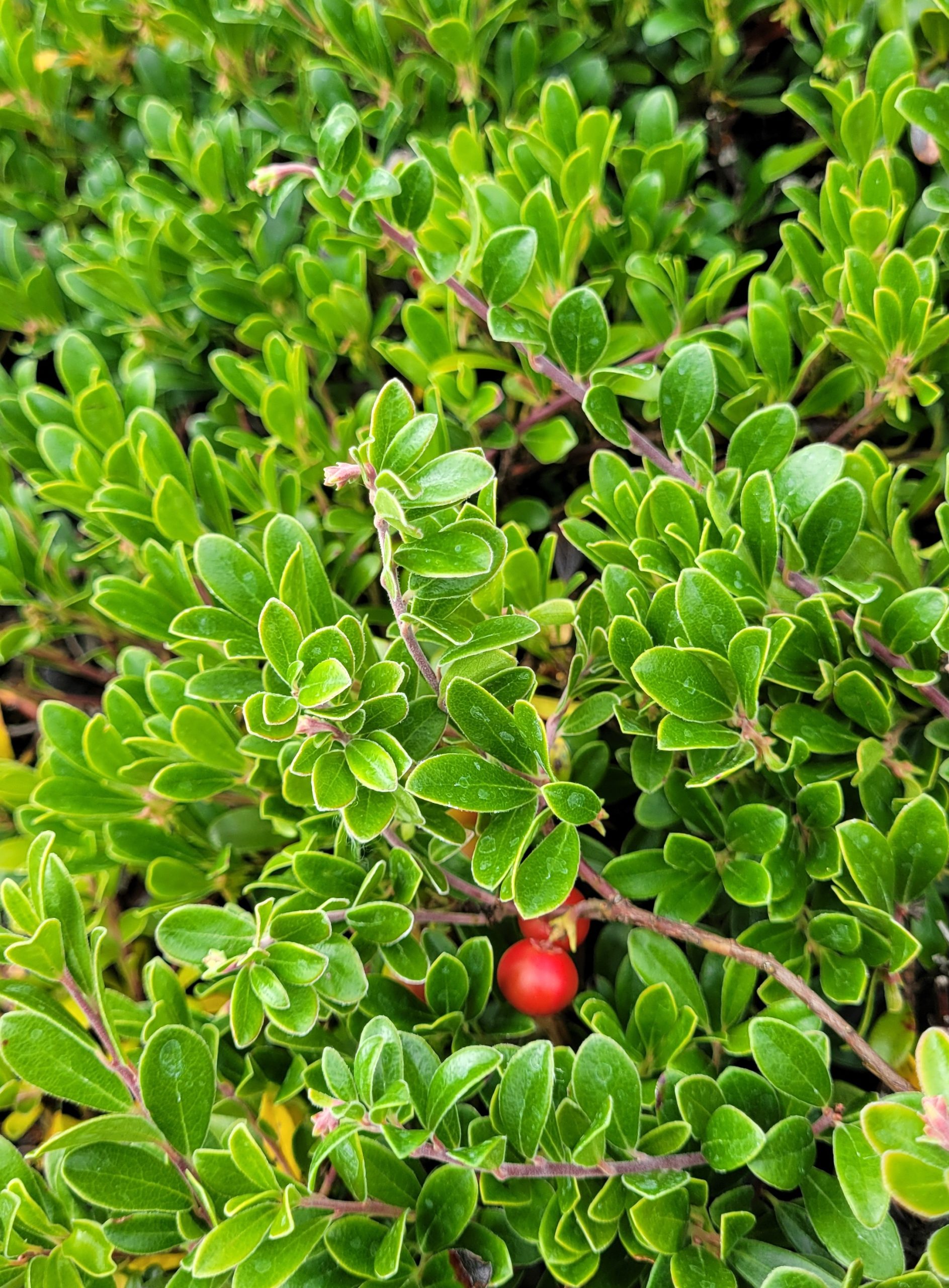
Fun Facts: Though common in circumboreal regions all over the Northern half of our planet, this is the pre-eminent, Pacific Northwest groundcover. The glossy, emerald green, leathery, small leaves cover the extending stems of this low-growing, creeping plant, creating lush mats of green in a wide range of conditions; hot, exposed parking strips, shady understory forest clearings, and dry tundra. Its flowers are small white to pink bells, reminiscent of Vaccinium flowers, and the resulting berries are bright red. The commonly used name Kinnick-kinnick comes from the tribal language Unami and means ‘smoking “mixture”‘. The Latin name ‘uva-ursi’ translates to ‘bear grapes’ – explaining the other common epithet of bearberry. It’s easily confused with lingonberry, but as far as flavor goes, it’s lacking the tart goodness of the aforementioned. These berries taste mealy, and – we think – are best left for the bears.
Size and Zone: This sprawler rarely gets taller than 6″ but extends rooting tendrils about a foot long. It’s exceptionally hardy; USDA zone 2-9.
Companion plants: Junipers, native sedum, grasses, native ferns (in part shade situations).