Description
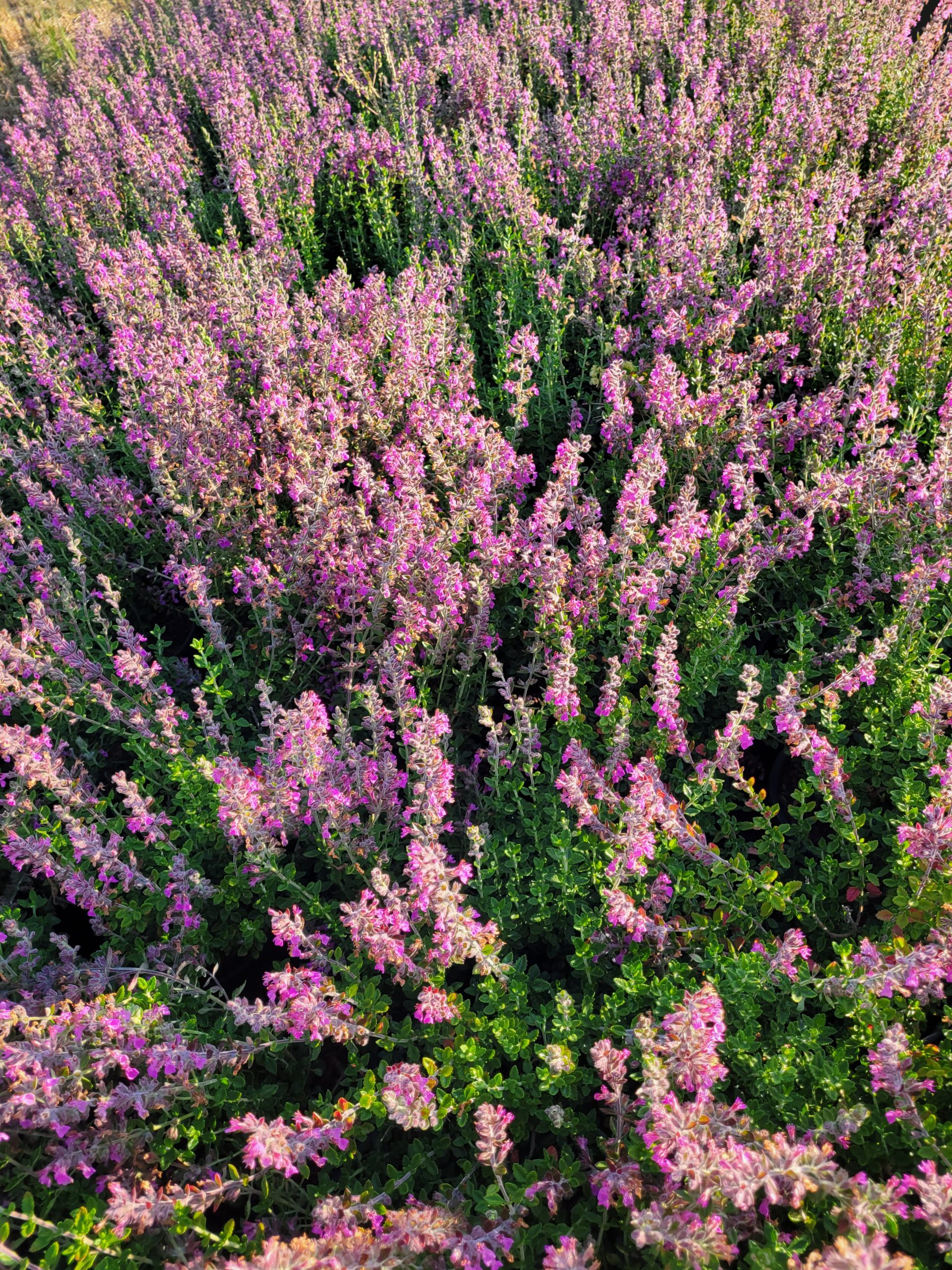
Fun Facts: Like its slightly larger and darker green cousin Teucrium chamaedrys, this is a supreme pollinator plant! Hoards of insects crowd around the flowers of this long-blooming, evergreen shrub for months on end. If you are a beekeeper ,this is a great shrub to plant near the hives. Even when not in bloom, this small, woody shrublet adds phenomenal textural interest. It’s small leaves look like miniature oak leaves, and were traditionally used for medicinal purposes. You can tell them apart by the fact that T. c. ‘Prostratum’ has lighter green leaves than the straight species. It’s native to the Levantine shores and northern Africa, so enjoys our Mediterranean-like climate. That said, it is hardy to far colder climes and is purportedly shunned by deer and rabbits alike. Best grown in average, well-draining soils in full sun with dry to medium moisture once established, and it is a great weed suppressant. It can tolerate part shade as well. Pinch or shear back after flowering to promote bushy, compact growth.
Per The Missouri Botanical Garden, the genus is thought to be named after Teucer – the first king of Troy, and ‘chamaedrys’ is Greek for ‘shrub oak’ – an apt description of its leaves and diminutive size. (Greek chamai meaning ‘of the ground’ or ‘dwarf’ and drys meaning ‘oak’.)
Size and Zone: To 6-8″ tall x 18-36″ wide. Hardy in USDA zones 5-9.
Companion plants: Stachys, nasella, hebe, sempervivum, sedum, achillea. Planted with Allium ‘Millenium’ you will get a spectacular color echo!